
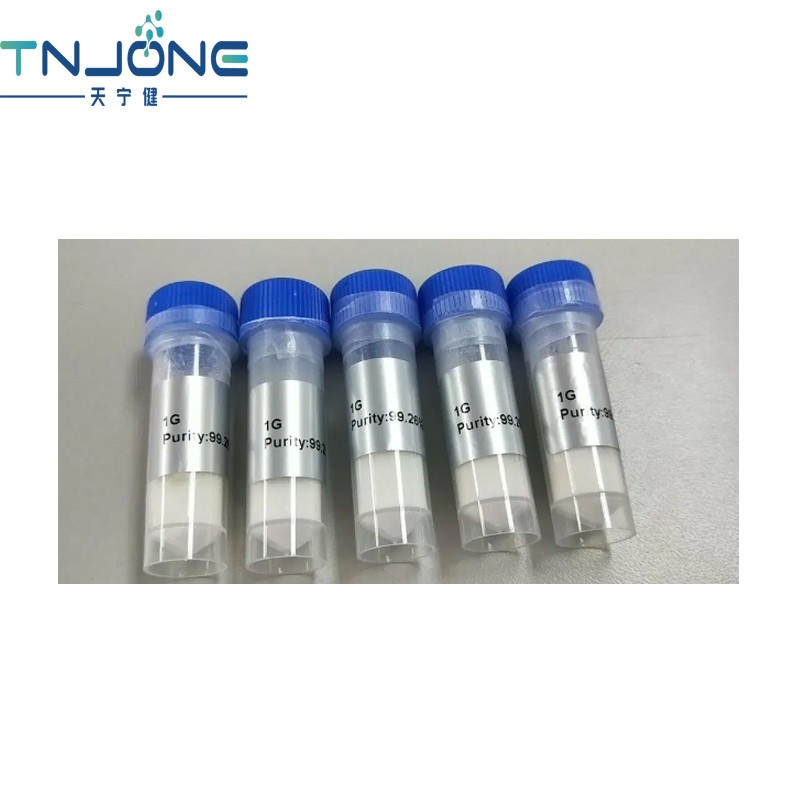
Introduction:
English alias: Thymosin Alpha 1
English name: Thymalfansin; Thymosin α1
Appearance: white powder
Content: ≥99% (HPLC)
Chemical formula: C129H215N33O55
Molecular weight: 3108.275
CAS number: 69440-99-9
EINECS number: 200-001-8
Density: 1.4g/cm3
Boiling point: 2899.7℃
Flash point: 1707.5℃
Storage conditions: -20℃, valid for 2 years, please use within one month after dissolving in solvent at -20℃.
Thymosin α1, chemically named N-acetyl-L-seryl-L-α-aspartyl-L-alanyl-L-alanyl-L-valyl-L-α-aspartyl-L-threonyl-L-seryl-L-seryl-L-α-glutamyl-L-isoleucyl-L-threonyl-L-threonyl-L-lysyl-L-α-aspartyl-L-leucyl-L-lysyl-L-α-glutamyl-L-lysyl-L-lysyl-L-α-glutamyl-L-lysyl-L-α-glutamyl-L-valyl-L-valyl-L-α-glutamyl-L-α-glutamyl-L-alanyl-L-α-glutamyl-L-asparagine, is an organic compound, a polypeptide composed of 28 amino acids, with a chemical formula of C129H215N33O55, and is mainly used as an immunomodulatory drug.
Thymosin α1 (Tα1) is a peptide hormone naturally present in the thymus, consisting of 28 amino acids. It was originally isolated from calf thymus, and then artificially synthesized and widely used in the field of immune regulation. Thymosin regulates the function of the immune system and enhances the body's ability to resist viruses, bacteria and tumors. It is mainly used to treat patients with immunodeficiency, chronic infections and certain cancers.
Main characteristics and effects of thymosin:
Enhanced immune function: Thymosin α1 can regulate and enhance the function of the immune system, especially by promoting the maturation and differentiation of T cells, and enhancing the ability of immune cells to fight pathogens and tumor cells. It can increase the activity of natural killer cells (NK cells) and enhance the body's antiviral and anti-tumor immune response.
Antiviral effect: Thymosin plays an important role in fighting viral infections (such as hepatitis B, hepatitis C, AIDS, etc.). It can enhance antiviral immunity by regulating the response of the immune system and help patients clear chronic infections.
Anti-tumor effect: Thymosin α1 can enhance the body's immunity against tumors and help inhibit the growth and spread of cancer cells. It is often used in combination with other anticancer therapies (such as chemotherapy or radiotherapy) to improve the therapeutic effect.
Modulating autoimmune diseases: Thymofasin has also shown certain effects in the treatment of certain autoimmune diseases (such as systemic lupus erythematosus, rheumatoid arthritis, etc.). By regulating the immune system and reducing excessive immune responses, it helps to reduce inflammation and tissue damage.
Safety and tolerability: Thymosin α1, as an immunomodulator, generally has good safety and tolerability. There are few side effects, mainly discomfort at the injection site or mild allergic reactions.
Clinical application:
Thymosin α1 is used in many countries to treat various immune-related diseases. Its main application areas include:
1. Chronic viral hepatitis (such as hepatitis B and C)
2. Immunodeficiency (such as AIDS)
3. Malignant tumors (in combination with other therapies)
4. Autoimmune diseases
5. Severe infections and sepsis
Service Hotline:
+8618092446649Business Cooperation:
lily@tnjone.comTalent Recruitment:
lily@tnjone.com


