
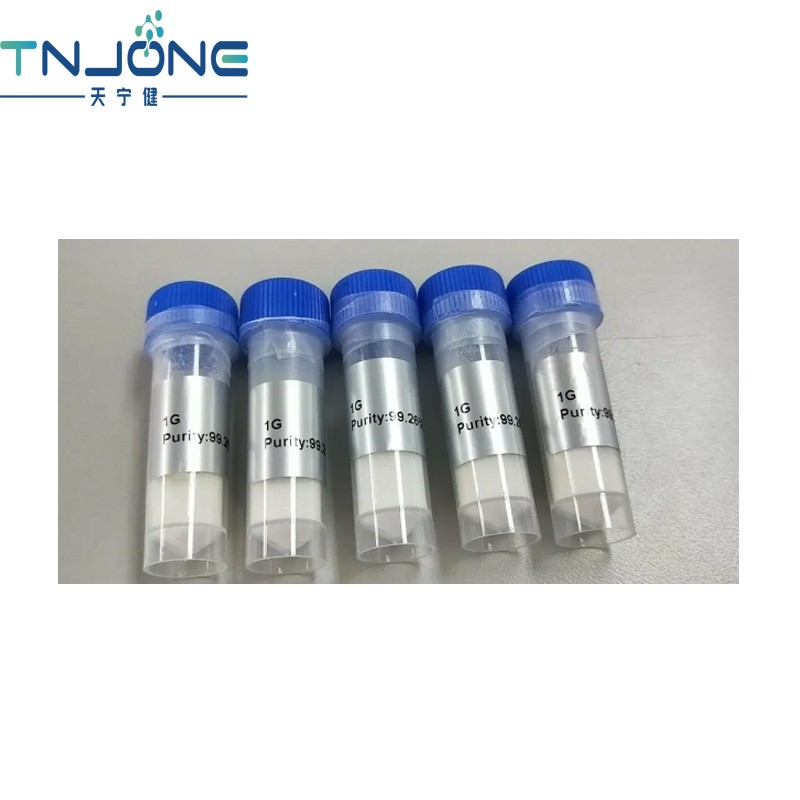
Introduction:
English alias: Tirzepatide; GIP\GLP-1; Tirzepatide (LY3298176)
English name: Tirzepatide
Appearance: white powder
CAS RN: 2023788-19-2
Content: ≥99% (HPLC)
Acetate content: 5.0%~12.0%
EINECS number: 200-001-8
Storage conditions: -20℃, valid for 2 years, please use within one month after dissolving in solvent at -20℃.
Tirzepatide is a new type of glucagon-like peptide-1 receptor (GLP-1) and glucose-dependent insulinotropic polypeptide (GIP, also known as: gastric inhibitory polypeptide) dual receptor agonist, administered once a week. GLP-1 and GIP are both incretins, which are polypeptides secreted by the gastrointestinal mucosa of the human body. The former can bind to receptors on pancreatic islet cells and stimulate insulin secretion, thereby producing a hypoglycemic effect, and can also delay gastric emptying and suppress appetite, thereby controlling weight; while the latter has the functions of inhibiting gastric acid and pepsin secretion, stimulating insulin release, inhibiting gastric motility and emptying, and can supplement the effect of GLP-1 receptor agonists. Tirzepatide integrates two insulinotropic effects into a single molecule, representing a new class of drugs for the treatment of type 2 diabetes.
Main features and effects of tirzepatide:
1. Dual mechanism of action:
(1) GLP-1 receptor agonism: GLP-1 is an incretin that can stimulate insulin secretion and inhibit glucagon secretion, thereby helping to lower blood sugar levels. It can also delay gastric emptying and reduce appetite.
(2)GIP receptor agonism: GIP is also an incretin hormone that can promote insulin secretion in a hyperglycemic environment and work together with GLP-1 to further enhance blood sugar control and weight loss.
2. Blood sugar control: Tirzepatide effectively reduces postprandial blood sugar levels in patients with type 2 diabetes by promoting insulin secretion and inhibiting the release of glucagon. Its dual mechanism makes it more effective than a single GLP-1 receptor agonist in controlling blood sugar.
3. Weight management: In addition to its glucose-lowering effect, Tirzepatide can also significantly reduce body weight. By reducing appetite, prolonging satiety, and increasing energy expenditure, it is particularly effective for obese patients or patients with type 2 diabetes who need weight management.
4. Cardiovascular protection: Preliminary studies have shown that telpotide may have the effect of reducing the risk of cardiovascular events, which is of great significance to diabetic patients at high risk of cardiovascular disease.
5. Administration: Tirzepatide is a once-weekly subcutaneous injection drug, which simplifies the patient's medication frequency and increases treatment compliance.
6. Side effects: Common side effects include gastrointestinal symptoms such as nausea, vomiting, diarrhea, etc. Patients usually gradually adapt to these side effects as treatment lasts longer. Because tebuconazole can enhance insulin secretion, it may increase the risk of hypoglycemia when used in combination with other glucose-lowering drugs (such as insulin or sulfonylureas).
Clinical application:
Tirzepatide has been shown to have excellent efficacy in lowering blood sugar and promoting weight loss, especially when compared with other glucose-lowering drugs. It is of great value to patients with type 2 diabetes who need to effectively control blood sugar and want to lose weight.
Service Hotline:
+8618092446649Business Cooperation:
lily@tnjone.comTalent Recruitment:
lily@tnjone.com


