
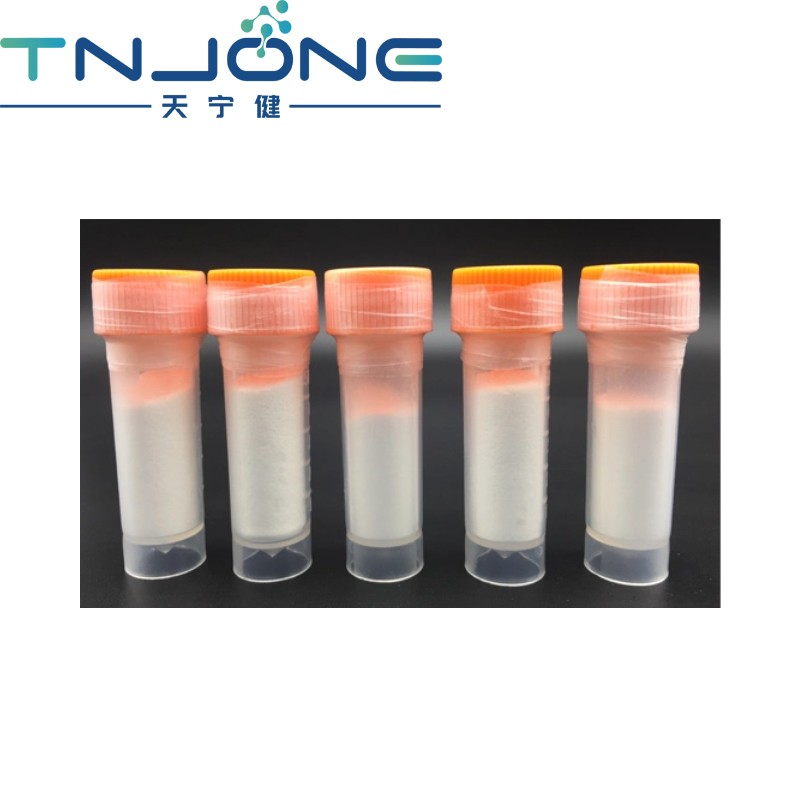
Introduction:
English alias: semgalutide; Semaglutide Injection
English name: Semaglutide
Appearance: white to off-white powder
Relative molecular mass: 4113.57754
CAS RN: 910463-68-2
Molecular formula: C187H291N45O59
Content: ≥99% (HPLC)
EINECS No.: 203-405-2
Storage conditions: -20℃, valid for 2 years, please use within one month after dissolving in solvent at -20℃.
Semaglutide is a new generation of GLP-1 (glucagon-like peptide-1) analogs. GLP-1 is a naturally occurring incretin hormone that can regulate blood sugar and appetite through multiple mechanisms. Semaglutide helps control blood sugar and promote weight loss by mimicking the effects of GLP-1. .
Semaglutide, also known as "Semeglutide" in English, is a new, long-acting, once-weekly subcutaneous GLP-1 analogue. It is a long-acting formulation developed based on the basic structure of liraglutide, and its effect in treating type 2 diabetes is better.
Main features and effects of semaglutide:
1. Lowering blood sugar: semaglutide helps control postprandial blood sugar by increasing insulin secretion and inhibiting glucagon release. At the same time, it can also slow gastric emptying and prevent a sudden rise in blood sugar after a meal. This makes it an effective treatment for patients with type 2 diabetes.
2. Weight management: semaglutide can suppress appetite, prolong satiety, and help patients consume fewer calories to achieve weight loss. It is effective in the treatment of obesity and is often used for weight management, especially for patients who have difficulty losing weight through traditional methods.
3. Cardiovascular protection: Clinical studies have shown that semaglutide can reduce the risk of cardiovascular events (such as heart attacks and strokes) in patients with type 2 diabetes, especially in patients with a history of cardiovascular disease.
4. Administration: Semaglutide can be administered by subcutaneous injection, once a week. An oral form of semaglutide has also been approved recently, making it easier for some patients to use.
5. Side effects: Common side effects include gastrointestinal discomfort symptoms such as nausea, vomiting, and diarrhea, which are usually most significant at the beginning of treatment. These discomforts usually subside as the body adapts. Other side effects include hypoglycemia (especially when used in combination with other hypoglycemic drugs) and potential risk of pancreatitis
Service Hotline:
+8618092446649Business Cooperation:
lily@tnjone.comTalent Recruitment:
lily@tnjone.com


