
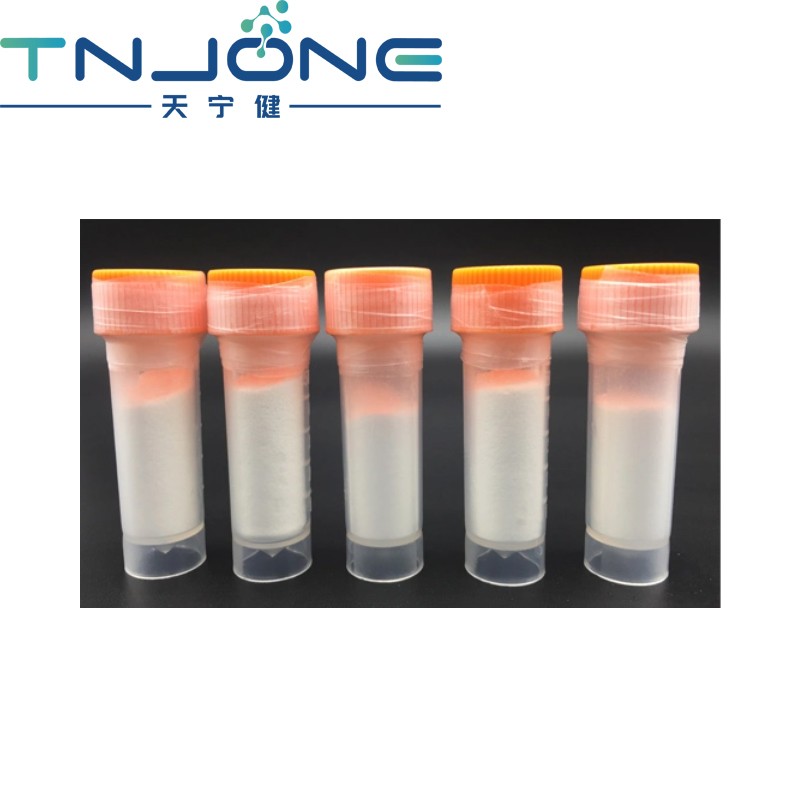
Introduction:
English alias: Liraglutide /Liraglutide Acetate
English name: Liraglutide
Appearance: white to off-white powder
Relative molecular weight: 3751.202
CAS RN: 204656-20-2
Molecular formula: C172H265N43O51
Content: ≥99% (HPLC)
Boiling point: >182°C (dec.)
Storage conditions: -20℃, valid for 2 years, please use within one month after dissolving in solvent at -20℃.
Liraglutide is a synthetic acylated human glucagon-like peptide-1 (GLP-1) analogue with more than 97% sequence similarity compared with human natural GLP-1. The changes in the molecular structure mainly include the following two points: first, the 34th lysine of the natural GLP-1 molecule is replaced by arginine, and second, a fatty acid side chain is added to the 26th lysine. On the one hand, this molecular change not only retains and prolongs the binding time of the acylated product with the protein, but also significantly overcomes the disadvantage of GLP's easy degradation.
Adverse reactions
The incidence of hypoglycemia during liraglutide treatment is very low; gastrointestinal discomfort is the most common adverse reaction in liraglutide treatment, and slowly increasing the dose of liraglutide can reduce the proportion of dose-related nausea. Gastrointestinal discomfort is common in the first week of liraglutide treatment, and diarrhea and nausea occur most frequently, most of which are short-term, mild or tolerable, and are related to the dose of liraglutide.
The main effects and characteristics of liraglutide:
1. Lowering blood sugar: Liraglutide helps lower blood sugar levels after meals by promoting insulin secretion and inhibiting the release of glucagon, while reducing the production of sugar in the liver. This is very effective for controlling blood sugar levels in patients with type 2 diabetes.
2. Promote weight loss: In addition to lowering blood sugar, liraglutide can also suppress appetite, prolong gastric emptying time, increase satiety, and help overweight or obese patients with type 2 diabetes lose weight.
3. Cardiovascular protection: Clinical trials have shown that liraglutide can reduce the risk of cardiovascular disease, especially in patients with type 2 diabetes who have cardiovascular disease.
4. Injection administration: Liraglutide is a drug that requires daily or weekly injections. It is usually administered by subcutaneous injection, and the dose is adjusted according to the individual patient's condition.
Side effects: Common side effects include gastrointestinal reactions such as nausea, vomiting, and diarrhea, which are usually most obvious in the first few weeks of treatment. In addition, hypoglycemia may occur in rare cases.
Service Hotline:
+8618092446649Business Cooperation:
lily@tnjone.comTalent Recruitment:
lily@tnjone.com


