
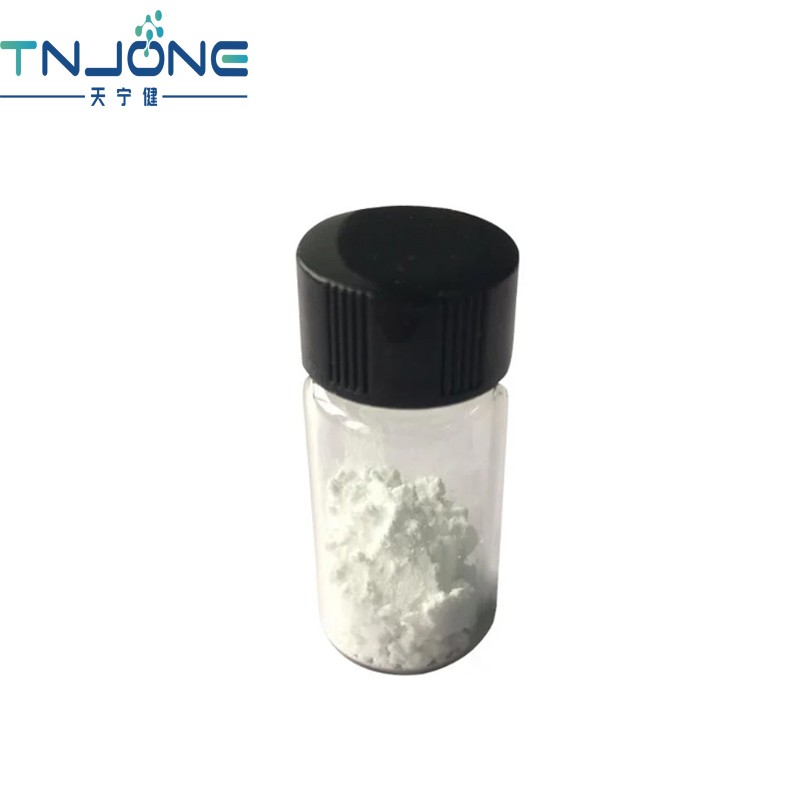
Introduction:
English alias: PNB-0408; N-hexanoic-Try-Ile-(6)-amino hexanoic amide; Hexanoyl-Tyr-Ile-Ahx-NH2
English name: Nootropic dipeptide
Appearance: White to off-white powder
Relative molecular weight: 504.66
CAS RN: 1401708-83-5
Molecular formula: C27H44N4O5
Content: ≥99% (HPLC)
Boiling point: 866.2±65.0 °C (Predicted)
Density: 1.111±0.06 g/cm3 (Predicted)
Storage conditions: -20℃, valid for 2 years, please use within one month after dissolving in solvent at -20℃.
Dihexa is an experimental peptide compound with the chemical name N-ethyl-1-(6-aminohexyl) cinnamamide. Dihexa (PNB-0408), an oligopeptide agent, is an orally active, blood-brain barrier permeable angiotensin IV analog. Dihexa binds hepatocyte growth factor (HGF) with high affinity, with a Chemicalbook Kd value of 65pM, and enhances its activity on the receptor c-Met. Dihexa has shown excellent antipsychotic activity and improved cognitive function in animal models. Dihexa has the potential to study Alzheimer's disease.
Main features and effects of Dihexa:
1. Promote nerve growth: Dihexa can promote the growth and repair of neurons by enhancing the activity of nerve growth factor. This makes it show potential in the treatment of brain damage, Alzheimer's disease and other neurodegenerative diseases.
2. Improve cognitive function: Some animal studies have shown that Dihexa can improve learning ability, memory and overall cognitive function.
3. Crossing the blood-brain barrier: Dihexa can effectively cross the blood-brain barrier and directly act on the brain, enhancing its effect on nerve cells.
4. Low toxicity: Although clinical data on Dihexa is still limited, early studies have shown that it has low toxicity in use.
It should be noted that although Dihexa's performance in animal experiments is encouraging, it has not yet been widely used in human clinical treatment, and its safety and effectiveness still need to be further verified
Service Hotline:
+8618092446649Business Cooperation:
lily@tnjone.comTalent Recruitment:
lily@tnjone.com


