
Introduction:
English name: Sodium hyaluronate
English alias: Sodium hyaluronate/sodium hyaluronate/sodium chloride hyaluronic acid/sodium hyaluronate; sodium hyaluronate
Relative molecular mass: 403.31
CAS RN: 9067-32-7
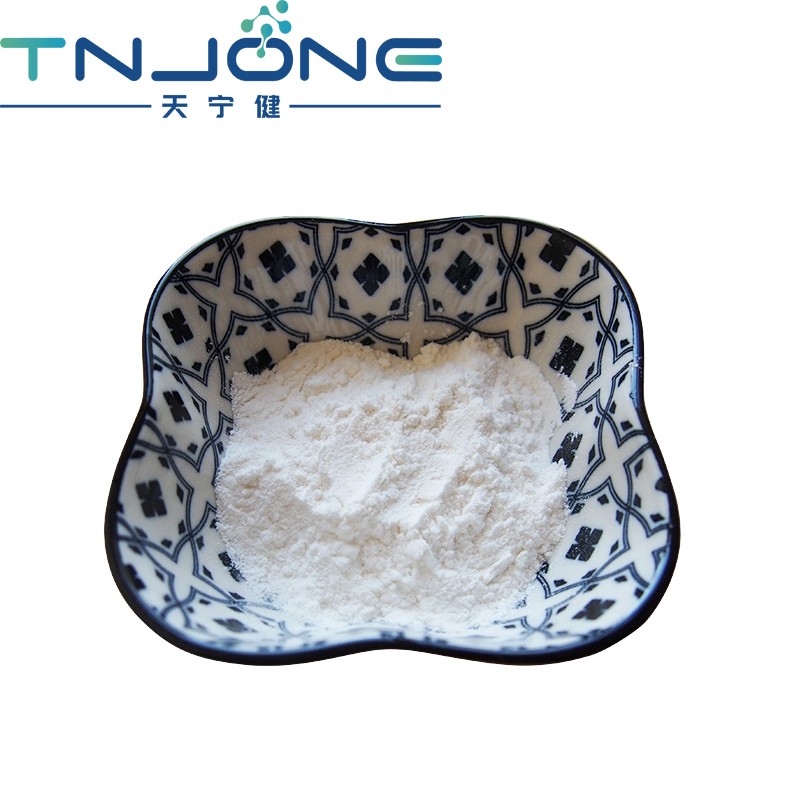
Appearance: white or milky white powder
Molecular formula: C14H22NNaO11
Content: ≥99% (HPLC)
Boiling point: 791.6 ℃
Density: 1.78 g/cm³
Sodium hyaluronate, with the chemical formula (C14H20NO11Na)n, is an inherent component in the human body. It is a glucuronic acid with no species specificity. It is widely present in tissues and organs such as the placenta, amniotic fluid, lens, articular cartilage, and skin dermis. It is distributed in the cytoplasm and intercellular matrix, and plays a lubricating and nourishing role on the cells and cell organs contained therein.
Principle
Sodium hyaluronate acts as a tissue lubricant and is believed to play an important role in regulating the interaction between adjacent tissues. It forms a viscoelastic solution in water. The high viscosity of the solution provides mechanical protection for tissues (iris, retina) and cell layers (cornea, endothelium and epithelium). The elasticity of the solution helps absorb mechanical stress and provide a protective buffer for tissues. In promoting wound healing, it is believed to act as a protective transporter, bringing peptide growth factors and other structural proteins to the site of action. It is then enzymatically degraded and the active protein is released to promote tissue repair.
Action
Anti-wrinkle
The moisture level of the skin is closely related to the hyaluronic acid content. With age, the hyaluronic acid content in the skin decreases, which weakens the skin's water retention function and produces wrinkles. Sodium hyaluronate aqueous solution has strong viscoelasticity and lubricity. When applied to the skin surface, it can form a moisturizing and breathable film to keep the skin moisturized and shiny. Small molecule hyaluronic acid can penetrate into the dermis, promote blood microcirculation, and facilitate the skin's absorption of nutrients, playing a health care role in beauty and anti-wrinkle.
Film-forming and lubricity It is a high molecular polymer. It has obvious lubrication and good hand feel when applied. The macromolecule forms a breathable film on the skin surface, making the skin smooth and moist, blocking the invasion of foreign bacteria, dust, etc. The small molecule sodium hyaluronate can penetrate into the dermis, slightly dilate capillaries, increase blood circulation, improve intermediate metabolism, promote skin nutrient absorption, and achieve lubrication and plump effects.
Sunscreen and skin damage repair effect It can eliminate the active oxygen free radicals generated by ultraviolet rays in the sun on the skin surface, protect the skin from ultraviolet damage, and promote skin regeneration in the injured area by promoting the proliferation and differentiation of epidermal cells.
Moisturizing effect
Experiments show that compared with these moisturizers, sodium hyaluronate has the highest moisture absorption at low relative humidity (33%) and the lowest moisture absorption at high relative humidity (75%). This unique property is adapted to the skin's requirements for cosmetic moisturizing in different seasons and different environmental humidity, such as dry winter and humid summer. The moisturizing property of sodium hyaluronate is related to its quality. The higher the quality, the better the moisturizing performance. Sodium hyaluronate is rarely used alone as a moisturizer, and is often used in combination with other moisturizers.
Nutritional effect
Sodium hyaluronate is a biological substance inherent in the skin, and exogenous sodium hyaluronate is a supplement to endogenous sodium hyaluronate in the skin. Sodium hyaluronate with a smaller mass can penetrate into the epidermis of the skin, promote the supply of nutrients to the skin and the excretion of waste, thereby preventing skin aging and playing a role in beauty and skin care. Skin care is more important than other makeup, and has become a modern people's awareness of beauty care.
Repair and prevention
Light burns or sunburn caused by skin exposure to the sun, such as redness, blackening, and peeling of the skin, are mainly caused by ultraviolet rays in the sun. Sodium hyaluronate can promote the regeneration of the skin in the injured area by promoting the proliferation and differentiation of epidermal cells and scavenging oxygen free radicals. Prior use also has a certain preventive effect. Its mechanism of action is different from that of the UV absorbers commonly used in sunscreens. Therefore, the use of HA and UV absorbers in sunscreen skin care products has a synergistic effect, which can simultaneously reduce the penetration of ultraviolet rays and repair the skin damage caused by a small amount of ultraviolet rays that penetrate, playing a dual protective role.
The combination of sodium hyaluronate, EGF and heparin can accelerate the regeneration of epidermal cells, making the skin delicate, smooth and elastic. When the skin suffers from mild burns, applying aqueous cosmetics containing sodium hyaluronate on the surface can relieve pain and accelerate the healing of the skin in the injured area.
Lubrication and film-forming properties
Sodium hyaluronate is a high molecular polymer with strong lubricity and film-forming properties. Skin care products containing sodium hyaluronate have obvious lubricity and good hand feel when applied. After being applied to the skin, a thin film can be formed on the surface of the skin, giving the skin a good sense of smoothness and moisture, and protecting the skin. Hair care products containing sodium hyaluronate can form a thin film on the surface of the hair, which has the effects of moisturizing, lubricating, protecting hair, eliminating static electricity, etc., making the hair easy to comb and flowing and natural.
Thickening properties
Sodium hyaluronate has a high viscosity in aqueous solution, and its 1% aqueous solution is gel-like. It can thicken and stabilize when added to cosmetics.
Pharmacological effects
It is a physiologically active substance widely found in animals and humans, and is distributed in human skin, synovial fluid, umbilical cord, aqueous humor and vitreous body. The molecular weight is 500,000 to 730,000 Daltons. Its solution has high viscoelasticity and contour properties. It is an auxiliary agent for ophthalmic surgery. After the solution is injected into the anterior chamber, it maintains a certain depth of the anterior chamber of the eye, which is convenient for surgical operation. It also protects corneal endothelial cells and intraocular tissues, reduces surgical complications, and promotes wound healing.
Service Hotline:
+8618092446649Business Cooperation:
lily@tnjone.comTalent Recruitment:
lily@tnjone.com


