
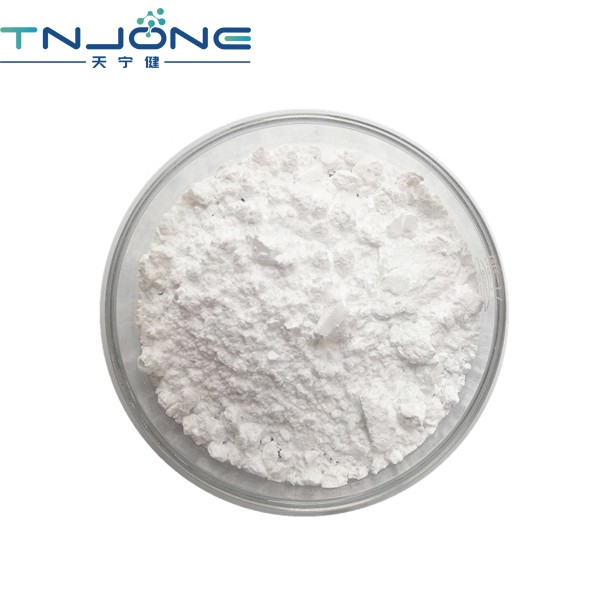
Introduction:
English alias: CAPROYL SPHINGOSINE; HYDROXYCAPROYL PHYTOSPHINGOSINE; HYDROXYCAPRYLOYL PHYTOSPHINGOSINE; HYDROXYLAUROYL PHYTOSPHINGOSINE; LACTOYL PHYTOSPHINGOSINE
Chinese name: Ceramide
Chinese alias: Caproyl sphingosine; Nano-encapsulated ceramide; Bioactive ceramide; Transparent ceramide; N-acetylated ceramide; Ceramide (caproyl sphingosine)
Relative molecular mass: 397.63488
CAS RN: 100403-19-8
Molecular formula: C24H47NO3
Content: ≥99% (HPLC)
Storage conditions: Store at -20°C
Ceramide is a type of phospholipid with ceramide as the skeleton, mainly ceramide phosphorylcholine and ceramide phosphorylethanolamine. Phospholipids are the main components of cell membranes. 40%~50% of sebum in the stratum corneum is composed of ceramide. Ceramide is the main part of the intercellular matrix and plays an important role in maintaining the balance of moisture in the stratum corneum. Ceramide has a strong ability to associate with water molecules. It maintains skin moisture by forming a mesh structure in the stratum corneum. Therefore, ceramide has the function of maintaining skin moisture.
Ceramide is the latest generation of moisturizers developed in recent years. It is a water-soluble lipid substance. It has a similar structure to the substances that constitute the stratum corneum of the skin. It can quickly penetrate into the skin and combine with the water in the stratum corneum to form a mesh structure to lock in moisture. Ceramide is the main component (>50%) of the intercellular lipid body in the stratum corneum on the outermost side of human skin. It plays an important role in preventing moisture from escaping and protecting against external stimuli. It is responsible for protecting the skin and moisturizing and hydrating. There are also many research reports that the purpose of preventing allergic skin diseases and inhibiting melanin brown spots can be achieved by using topical cream products containing ceramide.
Preparation method
There are three main ways to obtain ceramide:
1. Natural extraction method
Naturally extracted ceramide comes from animals and plants. Animals come from the brains of animals with pathogenic risks, so they cannot be used in cosmetics. Plant extraction methods are limited by plant growth cycles and seasons, and the yield is low.
2. Chemical synthesis method
Chemical synthesis is mainly pseudoceramide, which has a similar structure and function to ceramide and can be used in cosmetics. Many pseudoceramides have been successfully synthesized.
3. Microbial fermentation method
Microbial fermentation is a common method for preparing ceramide in recent years, that is, using Pichia yeast (Pichiaciferrii) or Saccharomyces cerevisiae (Saccharomyces cerevisiae) to ferment under certain conditions to obtain tetraacetyl phytosphingosine (TAPS), then deacetylate it to obtain phytosphingosine, and add fatty acids to synthesize ceramide and other substances.
Effects of ceramide on skin
1. Moisturizing effect: Ceramide is the main component of lipids in the stratum corneum of the skin. It can help repair the skin barrier and make the skin soft and shiny. However, ceramide gradually decreases with age, and the skin will become dull and dry without it.
2. Barrier effect: Sufficient ceramide in the skin can resist external stimulation, but if it is missing or absent, the skin will lose its natural protective effect and have no defense against all external physical and biological damage. For example, the skin is more likely to get sunburned when exposed to the sun, and it is easy to get red when the weather gets cold.
3. Anti-allergic effect: This is good news for children with thin skin. Ceramide can help thicken the stratum corneum, improve the tolerance of the entire skin, protect against the invasion of harmful substances from the outside world, avoid sensitivity, and repair red blood.
4. In addition, ceramide also has very good anti-aging, auxiliary whitening and antioxidant effects.
Application in medicine
1. Anti-tumor
The onset of many tumors is related to the anti-apoptosis of cells. Therefore, the treatment of tumors is mainly to induce cell apoptosis. Traditional tumor treatment mainly relies on drug chemotherapy, that is, drug-induced cell apoptosis. Ceramide treatment of tumors is different from general drugs. It can directly act on the cell apoptosis signal transduction pathway, thereby causing cell apoptosis. Therefore, ceramide has opened up a new treatment option for anti-tumor. Ceramide is divided into endogenous ceramide and exogenous ceramide. In the process of treating tumors, the concentration of intracellular ceramide can be increased by directly adding exogenous ceramide or promoting the synthesis of endogenous ceramide, inducing cell apoptosis, and achieving the purpose of treating tumors. When cells are stimulated by various external conditions, endogenous ceramide begins to synthesize, promoting the increase of intracellular ceramide concentration and possibly inducing a series of physiological and pathological reactions such as cell apoptosis. Therefore, ceramide is considered to be a lipid that can inhibit tumor cells.
2. Prevention and treatment of cardiovascular diseases
Vascular endothelial cells are the first barrier of the cardiovascular system. The integrity and endocrine function of vascular endothelial cells are related to whether the function of the cardiovascular system is normal. When the body is in a diseased state, the expression of a large number of inflammatory factors in the body will increase sharply and a large number of them. The overexpression of inflammatory factors will affect the integrity and endocrine function of endothelial cells, and in severe cases, it will even cause endothelial cell apoptosis. Ceramide plays a significant role in inducing endothelial cell apoptosis. It can be seen that ceramide plays a very important role in regulating the integrity of endothelial cells and endocrine function. Ceramide induces apoptosis of vascular endothelial cells through the Fas pathway, which plays a very important role in studying the mechanism of ceramide-induced apoptosis of vascular endothelial cells.
3. Anti-inflammatory
TNF (tumor necrosis factor) is a positive regulatory factor of inflammation. TNF can directly activate neutrophils. In recent years, data have shown that increasing the amount of intracellular ceramide can increase the amount of TNF in the body, thereby inducing apoptosis of various cells. The effect of ceramide on TNF, a positive regulatory factor of inflammation, shows that ceramide has an anti-inflammatory effect.
Service Hotline:
+8618092446649Business Cooperation:
lily@tnjone.comTalent Recruitment:
lily@tnjone.com


